The Seven Areas of Reading
Teaching children to read is our number one priority. This document outlines the seven areas of reading that are central to our curriculum. Those areas are:
- Prioritising reading
- Fostering a love of reading
- Programme and Progress
- Books match sounds
- Phonics from the start
- Catch up quickly
- Early Reading experts
Reading for Pleasure
At Badsley Primary, we know that children who read for pleasure are more likely to do well in school and in later life. We believe that reading provides a doorway to new experiences and a window to lives that are different to our own. Reading provides escape, enjoyment, and the chance to see our own selves reflected in the stories we read. We constantly invest in high quality books that will engage and inspire our pupils to read, at every opportunity. Books are chosen very carefully, ensuring that they include books that reflect different cultures, beliefs and ways of life, books that reflect our own community and books in which children can picture themselves as the hero.
Why not take a look at some book recommendations from Mrs Billard and children at Badsley?
Take a look at some of the fabulous books we love to read!
Oh, how we love to read - whenever and wherever we can!
Library Visits
During the summer term, lots of parents and carers were able to join in our Class Library Sessions, which made the children really happy! We also had a visitor from Rotherham Libraries who came to do lots of book-based activities with FS2 and KS1. Some of our KS2 classes were able to visit Mowbray Library too.
If you would like your child to become a Rotherham Libraries member, please ask at school reception for a joining form.
Reading Updates.
Check back to see our most-recent reading updates at Badsley!
World Book day, 2025
This year, the WBD theme was 'Read Your Way'. The children thought about where and what they like to read and then came in an outfit that showed that. Some children chose to dress in an outfit that reflected their interests and hobbies. We all chose books to recommend to other readers and children took ownership of redesigning their classroom libraries.
As well as each child receiving a World Book Day book voucher, school has also invested in buying each child one of the WBD books. The 'travelling bookshop' visited every class so that children could choose their own book.
Take a look at these photos - it was a fabulous day!


.jpeg)
.jpeg)
.jpeg)
.jpeg)
Reading in the Community
At Badsley, we LOVE to share our passion for reading! Our Reading Ambassadors regularly visit our friends at Laureate Court Care Home and, in the summer term, we visited Rotherham Hospice too!
Creative Storytelling Week, 2025
This summer, we chose to participate in Rotherham's Children's Capital of Culture activities, as we celebrated our love of reading through activities in music, drama, art and dance. We had a great week exploring the stories of Little Red Riding Hood (FS2), Hansel and Gretel (KS1), Alice in Wonderland (Y3/4) and The Tempest (Y5/6). Take a look at some of the photos from Y4 (and watch out for some beautiful artwork that will be on display, next term):
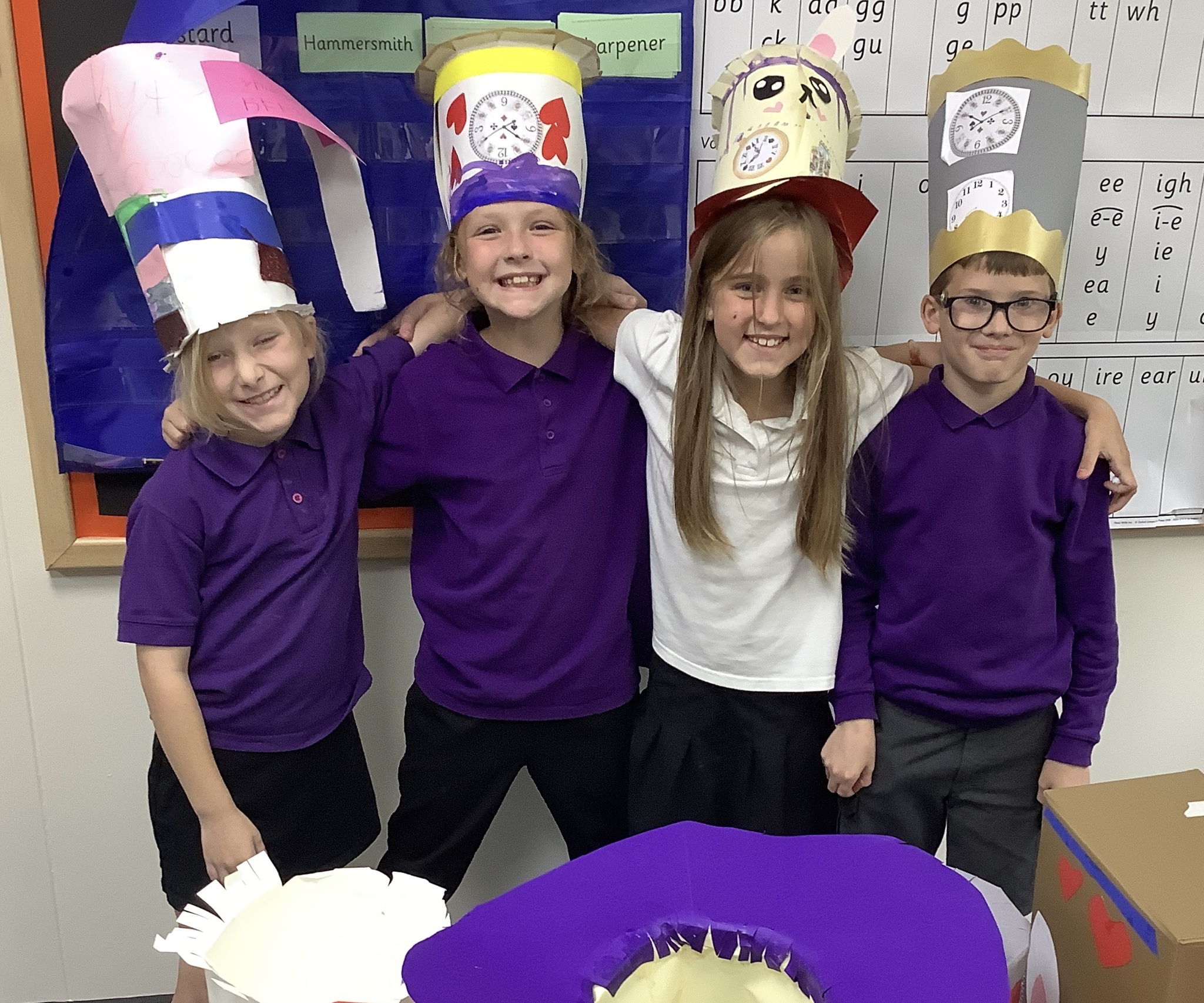
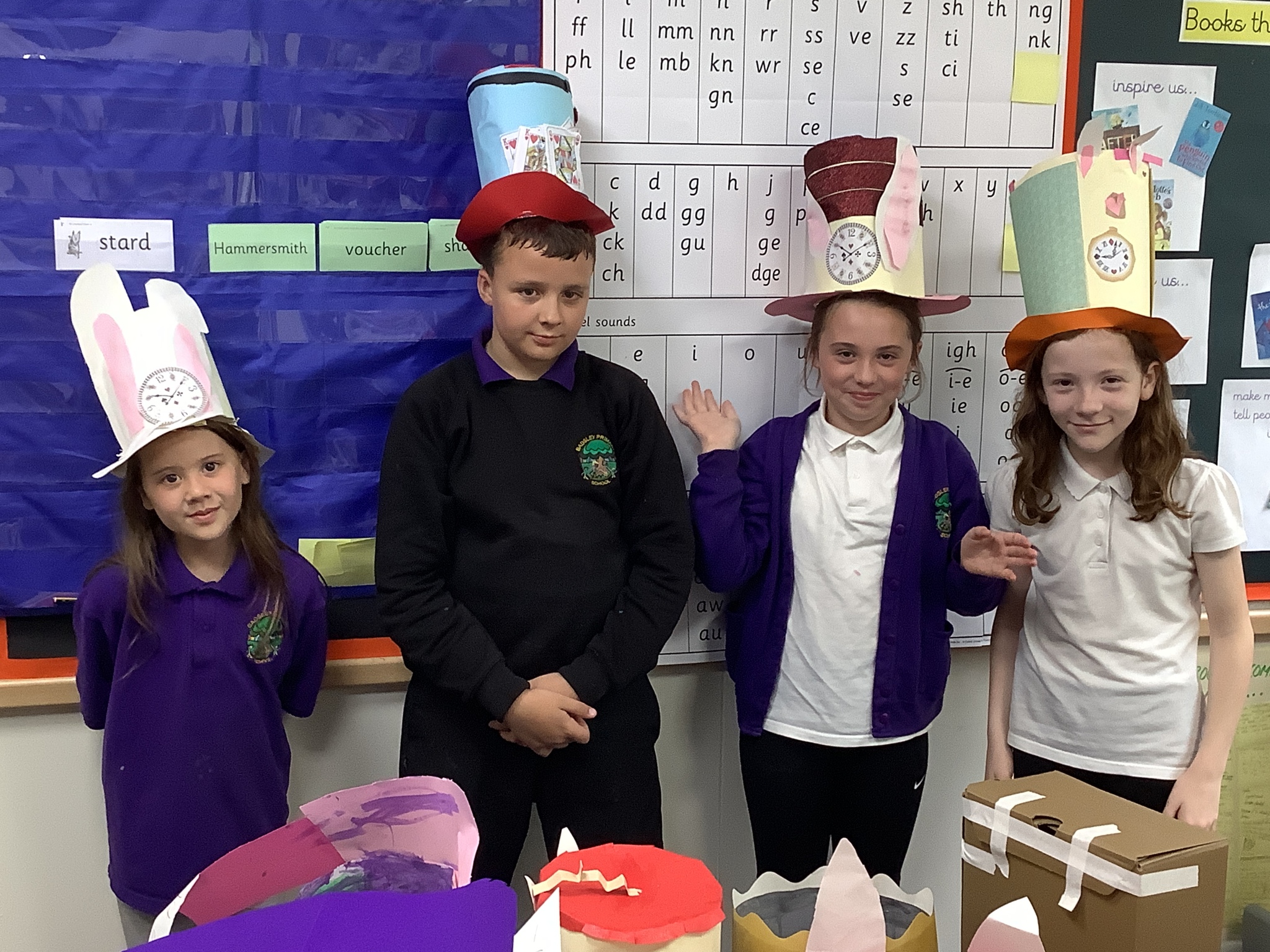
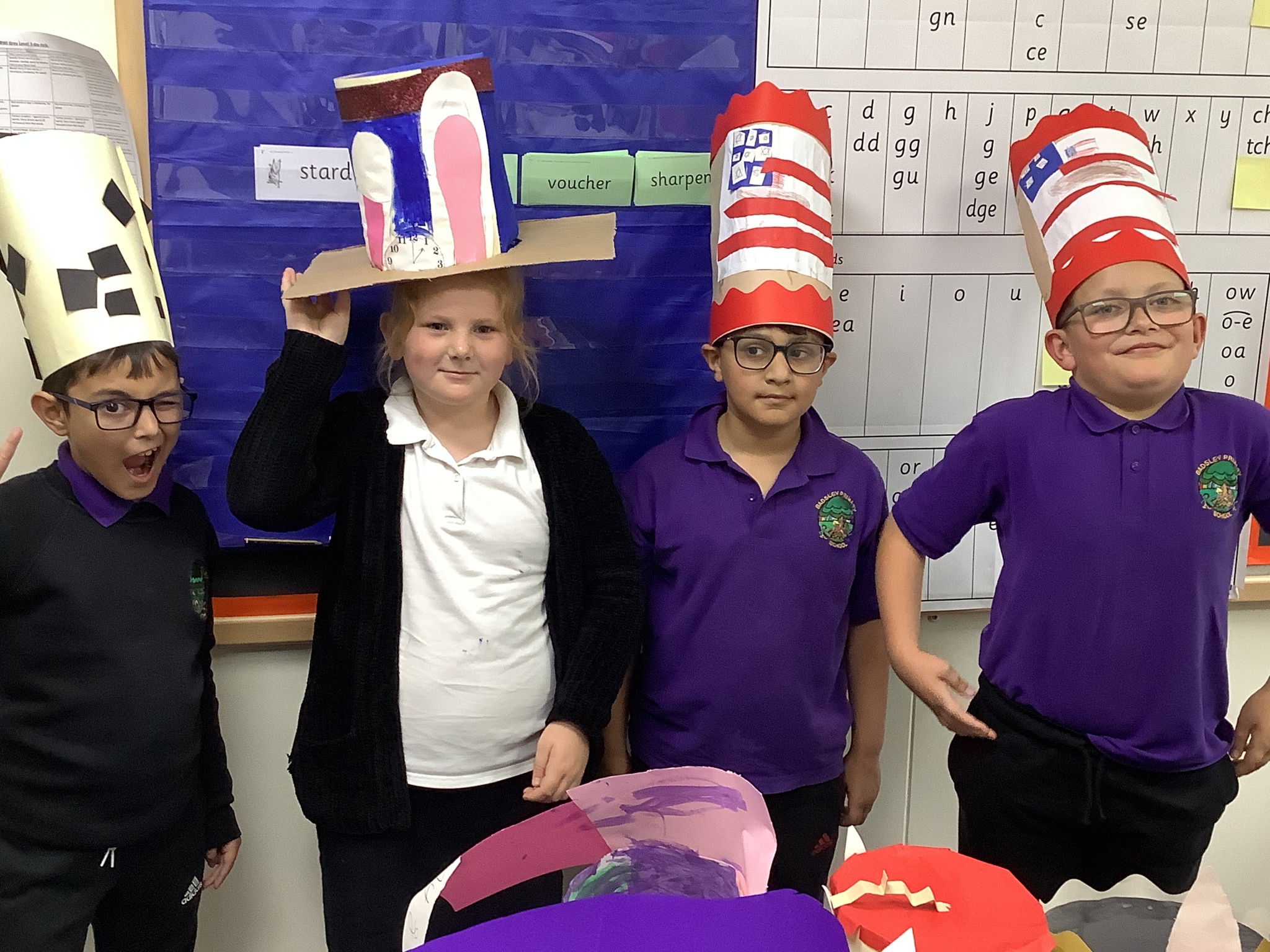
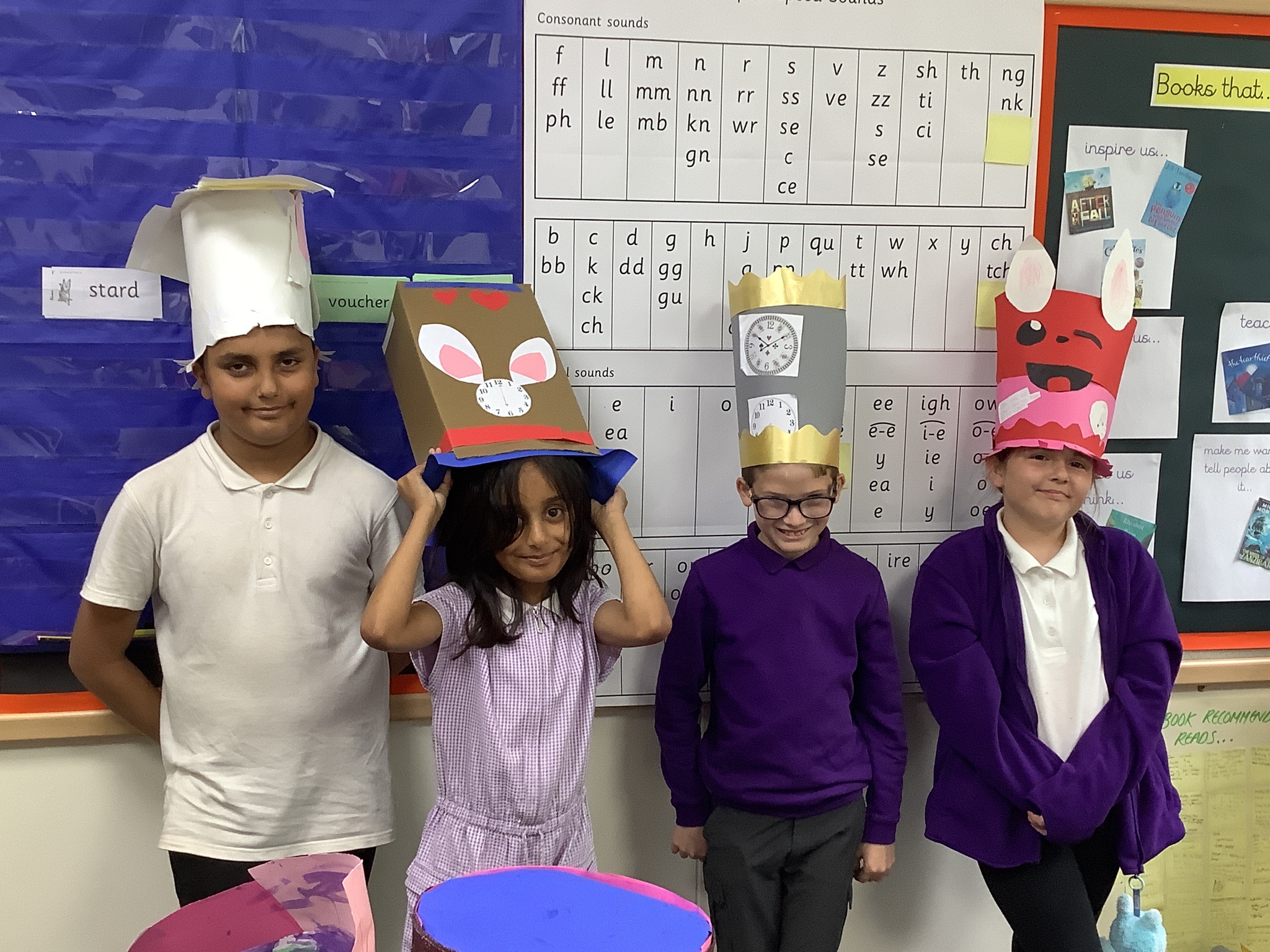
'My favourite part about Poetry Week was when Attie Lime came to school and we made up a bean poem.' Ivy, Y2
'I enjoyed the Easter egg poem that Attie Lime read out because it was funny.' Lottie, Y2
'I liked when we got to act out what we were going to do when the dragon was in front of us. We could use scissors and goggles - it was so much fun!' Sinead, Y6
'I enjoyed it when we made the poem all together.' Nova, Y2
'I liked the Easter Egg poem she read, my birthday is on Easter!' Leia, Y2
'When Attie came, we wrote a poem together and she used my ideas. It encouraged us to write our own poems.' Tiarna, Y6
'Attie Lime made me laugh with her poems!' Abdul, Y2
What a wonderful Poetry Week we had!
We read and performed lots of poems by Attie Lime and had a fabulous day with her in school!
Here are just a few of the photos we took:
Attie shared lots of her poems with us - FS2 and Y1 really enjoyed performing 'I like cheese'. 'Miss says no', and lots of other poems from her book 'Cornflakes and Gravy'. Y2 - Y6 worked with Attie to create their own collaborative poems and were so inspired, they wrote their own afterwards, too!
Take a look at some of the poems our children have written...
We absolutely loved our day with Attie, and she had a great time too! Here's what she had to say:
The Badsley children were fantastic to work with, and had such brilliant ideas. It was a joy to see and hear such a love of poetry and reading throughout school.
Many thanks again for inviting me to share the poetry love at Badsley!
Did you know?
Reading to your child is so important. As well as being a lovely bonding time, reading to children develops their imagination and their understanding of the world. It also develops their language and vocabulary, which is so important in the early years and throughout life.
By the time they are five, a child who...
- is never read to, has experienced around 4,622 words
- is read to 1-2 times a week - around 63,570 words
- is read to 3-5 times a week - around 169,520 words
- is read to daily - around 296,600 words
- has five books a day - around 1,483,300 words
Reading to children is vital however old they are - even when they can read by themselves!
Have a look at these top tips for reading stories to your child
If you would like some ideas for picture books and novels that your children might enjoy, take a look at these Recommended Reads from the Books for Topics website:
We teach early reading and phonics through Read, Write, Inc. Here are some documents that are useful for supporting your child at home. Remember, if you have any questions about reading, please do speak to your child's class teacher, Mrs Green or Mrs Russell - we are always happy to talk about reading!
This flip book is the presentation we shared at the FS2 Parent Information meeting. It contains useful reminders for how we teach RWI in school and how you can help your child at home.
FS2
Writing at Badsley aims to put quality literature at its heart. It provides our pupils with rich language models and experience of effective writing used by leading authors, to inspire their own. Our writing curriculum engages our children through quality texts and drama, which motivates them to write for a range of purposes and audiences.
Our writing journey:

Read and Explore
Drama is an essential element of our writing journey, fostering effective communication, building empathy, enhancing confidence and providing valuable experiential learning opportunities for our pupils.
Develop Skills

We use the "I Do, We Do, You Do" method to help students learn key grammar and punctuation skills in a structured and supportive way. This approach ensures that children build confidence and mastery over time.
Innovate
Our writing journey includes plenty of opportunities for collaborative learning, where we encourage children to work together through paired writing activities. During the editing and proofreading process, students are encouraged to support and guide each other, helping to strengthen their skills and confidence.
Handwriting
At Badsley, we use Read Write Inc. Handwriting from FS2 to Year 3 and Letter-join from Years 4 to 6. Both programmes provide a structured and progressive approach to handwriting, helping children develop clear, legible and fluent handwriting.
Read Write Inc. Handwriting (FS2 – Year 3)
Read Write Inc. Handwriting teaches children how to form letters correctly before progressing to joining letters and developing fluency. Children are taught through short, regular sessions which include teacher modelling, guided practice and opportunities to apply their skills.
The programme follows four stages:
- Stage 1 – Letter formation: Children learn to form letters correctly using memorable pictures and phrases linked to their phonics learning.
- Stage 2 – Letter size and positioning: Children develop consistency in letter size and learn how to position letters correctly on the line.
- Stage 3 – Joining letters: Children are introduced to letter joins and practise forming these accurately.
- Stage 4 – Fluency and speed: Children develop a fluent and consistent handwriting style, focusing on accuracy, presentation and speed.
Throughout the programme, children are also taught the importance of correct pencil grip, posture and paper positioning.
Letter-join (Years 4 – 6)
As children move into Key Stage 2, they continue to develop their handwriting through the Letter-join programme.
Letter-join builds on the foundations established in earlier years, supporting children in developing a fluent, consistent and legible joined handwriting style.
Lessons focus on:
- Accurate letter formation and joins – Revisiting and refining letter formation and joining techniques.
- Consistency and presentation – Developing uniform letter size, spacing and alignment.
- Fluency and speed – Building handwriting stamina and increasing writing speed without compromising legibility.
- Applying handwriting skills – Encouraging children to maintain high standards of handwriting across all subjects.
Through daily practice, teacher modelling and opportunities to apply their skills, we aim to develop confident writers who can write fluently and automatically, allowing them to focus on the content and quality of their writing.

Spelling
At Badsley Primary School, we use Grammarsaurus Spelling from Year 2 to Year 6 to support children in becoming confident and accurate spellers.
Grammarsaurus follows a structured approach to teaching spelling, helping children understand spelling patterns, rules and the meaning behind words. Children are taught strategies to help them recognise patterns and apply their knowledge when writing.
Our spelling lessons focus on:
- Spelling rules and patterns – Exploring how words are structured and identifying common spelling patterns.
- Morphology – Understanding how root words, prefixes and suffixes work together to create meaning.
- Applying spelling knowledge – Encouraging children to use their spelling strategies independently across the curriculum.
At the beginning of the year, children complete a spelling assessment to help teachers identify gaps in their phonic knowledge. This allows us to adapt teaching and provide additional support where needed.
Through regular practice, retrieval and opportunities to apply their learning, we aim to develop confident, independent spellers who can make informed spelling choices in their writing.